Opener Repair for Memphis Homes Built Around 1988 in Bradenton

Memphis, Bradenton

Opener Repair for Memphis Homes Built Around 1988

Memphis, FL homes went up mostly around 1988, years before federal photo-eye rules on openers. Bradenton Garage Door Pros drives out to fix what that era left behind.

Serving Bradenton, FLBackground-checked techsHonest, upfront pricingFast local response

Booking

Booking a Visit

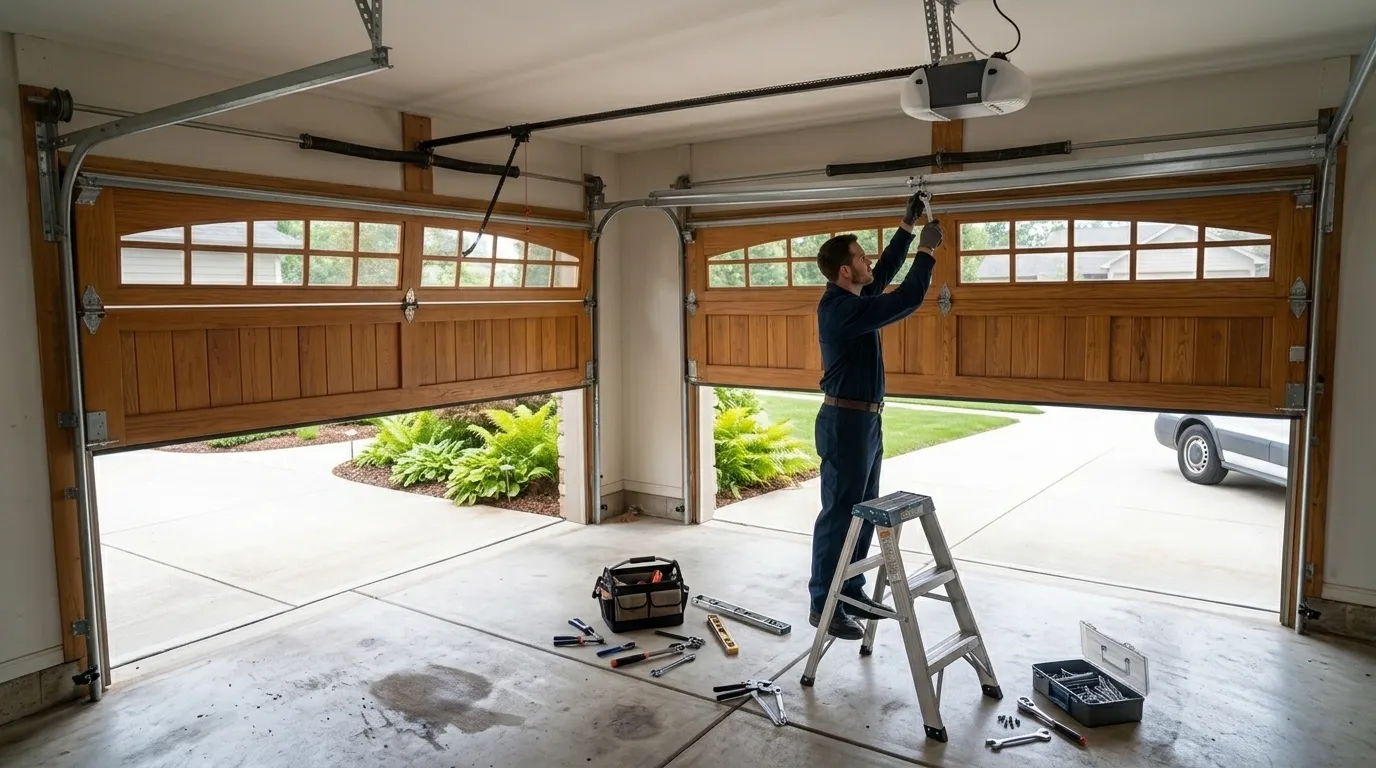
Memphis sits about 4 miles from Bradenton, and that's the drive our truck makes to get to your address - there's no branch office in Memphis itself, just a crew that comes out when you call. Tell us what the opener is doing (or not doing) when you set up the visit: a light that blinks but the door doesn't move, a motor that hums with no lift, a remote that used to work and suddenly doesn't. That detail decides whether we're bringing a logic board, a set of photo-eye sensors, or a full replacement unit on the truck, and it cuts down on a second trip.

We also ask what kind of opener it is if you know - chain, belt, or screw drive - and roughly how old it is. On a lot of Memphis houses, built around 1988 on average, the opener has been swapped once or twice already since the house went up, but the original bracket and header mounting are often still there, and that changes what fits.

Booking a Visit

Pricing

The Cost of This Job

We don't post a flat number for opener repair here because the range is wide - a capacitor or logic board swap is a different bill than a full unit replacement, and we won't quote either without seeing the unit.

Simple transparent billing model

What we can tell you is that Memphis households run a median income of $71,967, a bit under the wider service area's $77,359, and we price the job the same way regardless of address: parts plus labor, no invented add-ons.

Discontinued equipment forces replacement

One honest limit: if your opener is old enough that the manufacturer doesn't make the circuit board anymore, we're not going to chase down a part that doesn't exist. At that point replacement is the real answer, and we'll say so instead of billing you for a search.

What Causes It Around Here

Local causes

What Causes It Around Here

Memphis homes cluster around a 1988 build date, which puts a lot of original garage structures right at the edge of a big shift in opener design. Federal rules requiring photo-eye safety sensors on garage door openers didn't take effect until the early 1990s, so a house built in 1988 may still be running its first-generation opener with no sensors at all, or a first-round retrofit sensor pair bolted on after the fact and wired loosely.

That matters because a door that reverses randomly, or won't close past a certain point, is often the sensors - misaligned, or wired into a board that was never built to expect them. The mild coastal climate this part of Florida sits in doesn't add much freeze-thaw stress to the mechanism, so when we get called on an opener issue here it's almost always the electronics or the drive gear wearing out, not weather damage to the housing.

Timing

How Long It Takes

How long an opener repair takes depends on whether it's a same-visit fix or a part we have to track down. Here's how the common jobs break down, and what happens when your unit needs something we don't carry on the truck.

  1. Standard repairs, under two hours

    Most opener repairs on a single door, sensor realignment, a new logic board, or a drive gear replacement, run under two hours once we're on site with the right part already loaded on the truck for the visit.

  2. Full swaps take longer to mount

    Full opener swaps take longer, mostly because of matching the new unit's mounting to whatever bracket is already in the ceiling from the original 1988 installation or a later replacement. Getting that bracket fit right matters for how the opener performs afterward.

  3. Not every board is on the truck

    We don't carry every board for every brand on the truck, since the range of openers installed across decades of Memphis homes is wide. If your unit needs a part we don't stock, that's the moment we say so rather than pretend we can finish on the spot.

  4. A real timeline, not a guess

    If your unit needs a part we don't have with us, we'll tell you at the visit and give you a real timeline instead of guessing at how long the part will take to arrive. We'd rather be accurate than sound fast.

Watch-outs

What Can Go Wrong

Opener problems on houses this age tend to fall into a short list of repeat offenders. Here's what we run into most often, ranked by how frequently we see each one on a Memphis call.

Logic Board Outliving The Opener

The failure we see most in this stretch of homes is a logic board that's simply outlived its opener. The motor still runs, but the board that talks to the remote, the wall button, and the sensors has started dropping signals intermittently.

Retrofit Sensors Out Of Alignment

Second most common is sensors that were added on after the house's original 1988 opener install, now sitting slightly out of alignment and throwing false-obstruction stops. A small knock or shift over the years is often all it takes.

Stretched Chain Or Belt Drive

Less common but real is a chain or belt drive that's stretched enough that the door doesn't fully seat closed even though the opener thinks it has, which is more a mechanical fix than an electronics one. We'll tell you straight if what you've got is a repair or a replacement, since we're not going to run three service calls on a unit that should've been swapped on the first one.

Warning signs

What You Are Seeing

A few specific behaviors usually tell us what's wrong with an opener before we even get to the driveway. Here's what each one points to, and why we still test in sequence on site rather than guessing over the phone.

Blinking Light Before The Motor Engages

If your opener light blinks a set number of times before the motor engages, that's usually a manufacturer error code pointing at the sensors or the board. On a Memphis house built around the late 1980s, that's often the first place we look given the age of the original wiring runs.

Reversing A Few Inches Before Closing

If the door reverses a few inches before it closes, sensor alignment is the first suspect, not the motor itself. It's a quick thing to check on site before assuming a bigger, more expensive problem is behind it.

Remote Won't Close, Wall Button Does

A door that opens fine but won't close from the remote, though it closes fine from the wall button, points at the remote's signal or the receiver on the board, not the sensors at all. We test each part in sequence on site rather than guessing, which is part of why we ask what the door is doing before we drive out.

Questions

Common questions

Is there a Bradenton Garage Door Pros office in Memphis?

No. We're based in Bradenton and drive out to Memphis, about 4 miles, for every job. There's no local branch or depot here - just a truck that comes when you call.

Why does my opener's sensor keep tripping for no reason?

On houses from Memphis's era, roughly late 1980s builds, sensors were often added to an opener that wasn't originally designed with them, or installed slightly out of level. A small knock or shift over the years is enough to throw them out of alignment and trigger false stops.

Can you repair any opener, or do some need full replacement?

If the board or motor is available and the unit is otherwise sound, we repair it. If the manufacturer's stopped making parts for that model, replacement is the honest answer - we won't bill you to search for a board that doesn't exist anymore.

Ready when you are

Need a garage door sorted in Bradenton?

Bradenton Garage Door Pros repairs and installs garage doors, springs and openers in Bradenton, FL and the surrounding area.

CallGet a quote