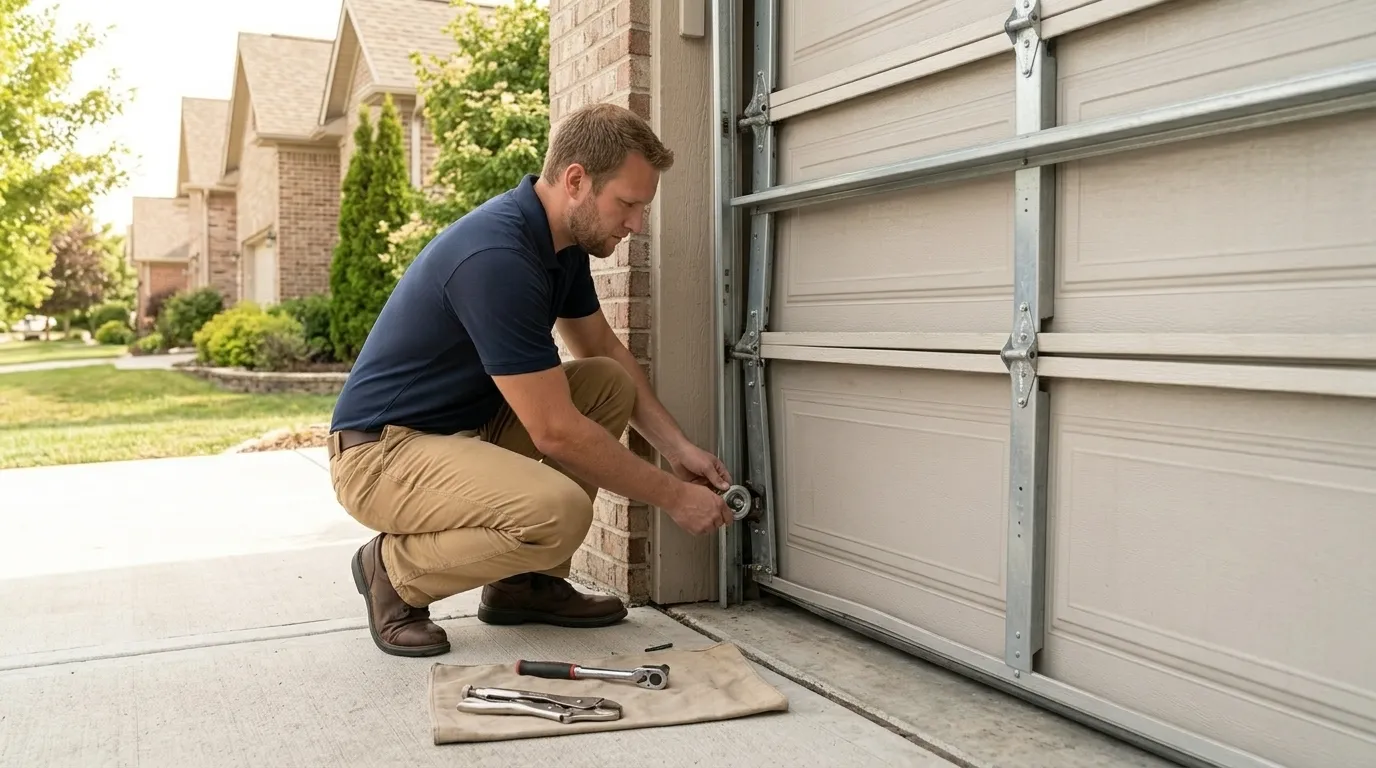
Garage Door Repair for Ellenton's 1980s Housing Stock in Bradenton

Ellenton, Bradenton

Garage Door Repair for Ellenton's 1980s Housing Stock

Serving Ellenton homes built mostly around 1988, we fix original springs, openers, and track hardware that's now over three decades old. Call from Bradenton.

Serving Bradenton, FLBackground-checked techsHonest, upfront pricingFast local response

Booking

Booking a Visit

We're based in Bradenton and Ellenton sits about 4 miles out, so getting a truck to you isn't the hard part. The hard part is knowing what you'll find once the door's open. Most Ellenton homes went up around 1988, which means a lot of what's inside that garage - the spring, the hinges, the opener bracket - is original hardware pushing 35+ years of service. Tell us the age of the house when you call, or the age of the door if it's been swapped once already. That single detail changes what we load on the truck before we ever knock on the door. We don't run a branch out here, so we schedule the visit from our Bradenton shop and come to you; there's no separate local dispatch number to remember.

Booking a Visit
What Causes It Around Here

Local causes

What Causes It Around Here

A door installed with a house built in 1988 has had three and a half decades of daily cycles on the same torsion spring, the same rollers, the same lift cable. Springs are rated for a set number of cycles, not a set number of years, and a door that age has almost certainly worn through more than one rated life span even if nobody's touched it since installation. Ellenton's climate band is mild temperate, so we're not dealing with deep freeze cracking or heavy snow load the way colder markets do - but humidity and salt air off the Gulf side of the county still work on unprotected steel cable and exposed hardware over that many years. The most common call we get from a house this age isn't a dead opener, it's a spring that finally let go, usually loud, usually mid-cycle, and usually the first time anyone's looked closely at that hardware since the house was framed.

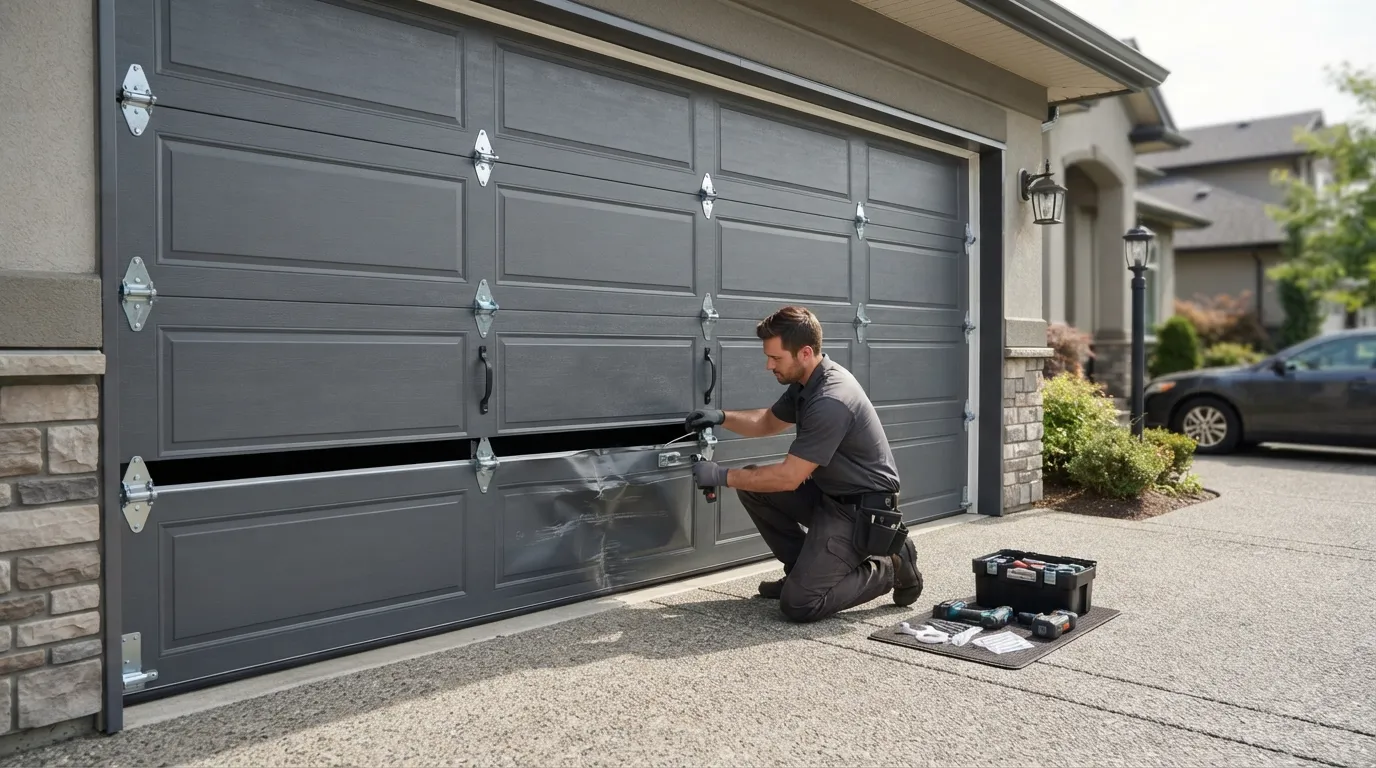
On the truck

What Is on the Truck

A house built around 1988 has usually gone through at least one hardware upgrade since, so we stock for both the original setup and whatever's replaced it since. Here's what rides on the truck for a call in this age of housing stock.

Era-Matched Springs, Rollers & Cable

For a neighborhood built mostly in the late 1980s, we stock springs sized for the torsion hardware common to that era, standard-width rollers, and the lift cable gauge that matches a door from that build window rather than a 2010s door.

Bracket Hardware for Both Eras

Openers from a house this age were likely replaced at least once already, since chain-drive units from the 90s and 2000s don't last 35 years. So we carry both the older-style bracket hardware for a door that's never been re-hung and newer opener mounts for a door that's had one upgrade already.

Confirming Size Before We Guess

We don't guess this in the driveway; if the spring size or cable gauge doesn't match what's on the truck, that's a second trip. We'd rather ask the house's age up front on the phone and avoid that extra visit.

Our process

How We Fix It

Repairing hardware that's three and a half decades old means checking more than just the part that failed, since one worn component on a door this age usually has company. Here's how we work through a typical repair visit on Ellenton's older housing stock.

  1. Inspect track, drum, and bearing plate

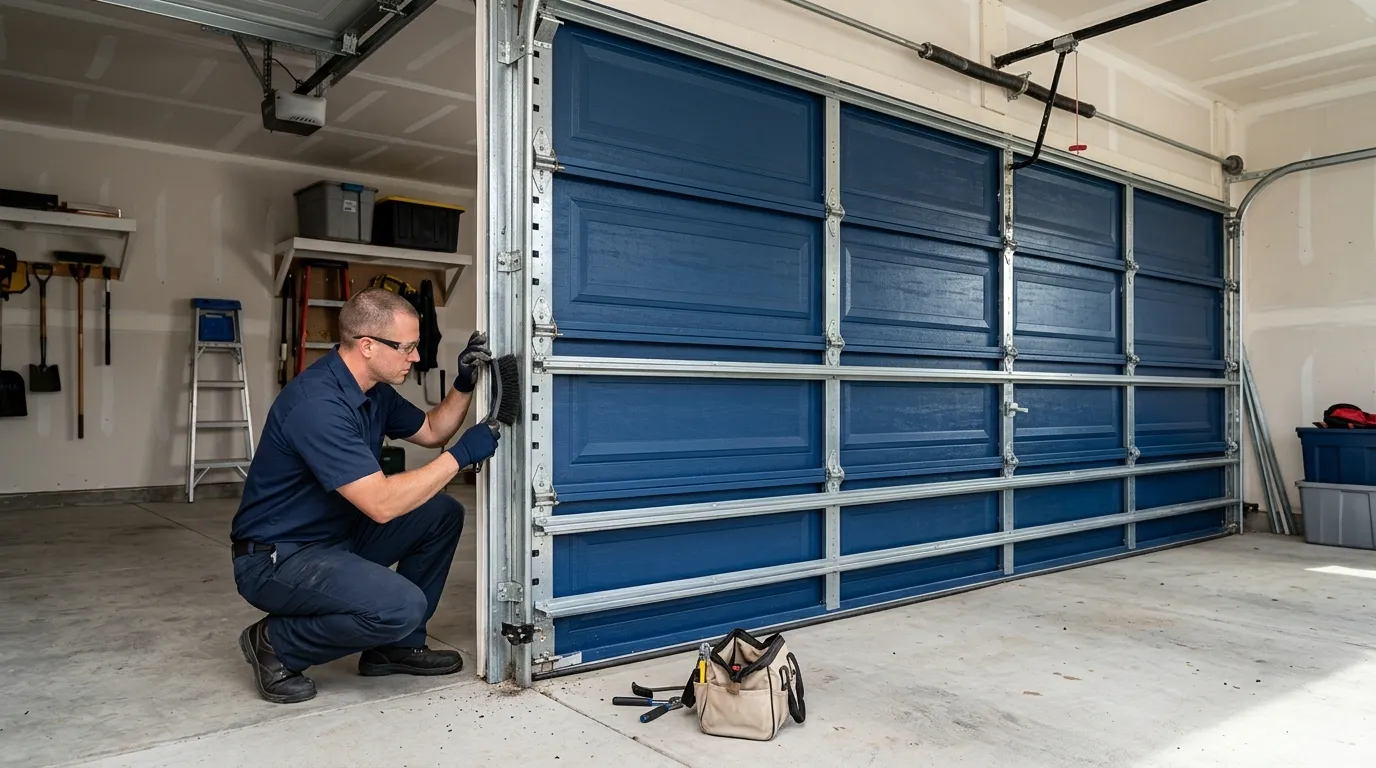
    We pull the door off tension, inspect the track for the wear pattern that decades of the same roller path leaves behind, and check whether the drum, cable, and bearing plate are original or have been touched.

  2. Note the mixed-age hardware

    On a house this age it's common to find one replaced part sitting next to two that never have been - a new opener bolted to an original bracket, for instance. That mix tells us what else might be close to failing.

  3. Replace what's failed, flag what's next

    We replace what's failed and flag what's close to failing, because a spring job on 35-year-old hardware often surfaces a cable or a bearing plate that's next in line. Catching it now saves a second call later.

  4. Balance and cycle-test the door

    We balance the door, run it through a full cycle test, and check the auto-reverse if there's an opener involved before we call the job done. Every repair ends with the door moving the way it's supposed to, not just moving.

The DIY Question

DIY or pro

The DIY Question

A torsion spring under tension can take a finger or worse if it lets go while you're working on it, and that risk doesn't go down because the spring is old - it goes up, since a spring that's been under load for over three decades is more likely to fail unpredictably than a new one. Lubricating hinges and rollers, tightening visible bolts, testing the auto-reverse with a piece of wood on the floor - that's reasonable homeowner work. Spring replacement, cable replacement, and anything involving the winding cone isn't, regardless of how many YouTube videos make it look simple. If you're not sure which category your problem falls into, that uncertainty is itself a reason to call rather than guess.

Warning signs

What You Are Seeing

The symptom you notice first usually tells us which part failed, and on hardware this age, the three most common failures each look a little different. Here's how to tell a spring, a cable, and worn rollers apart before we even arrive.

Door Won't Budge

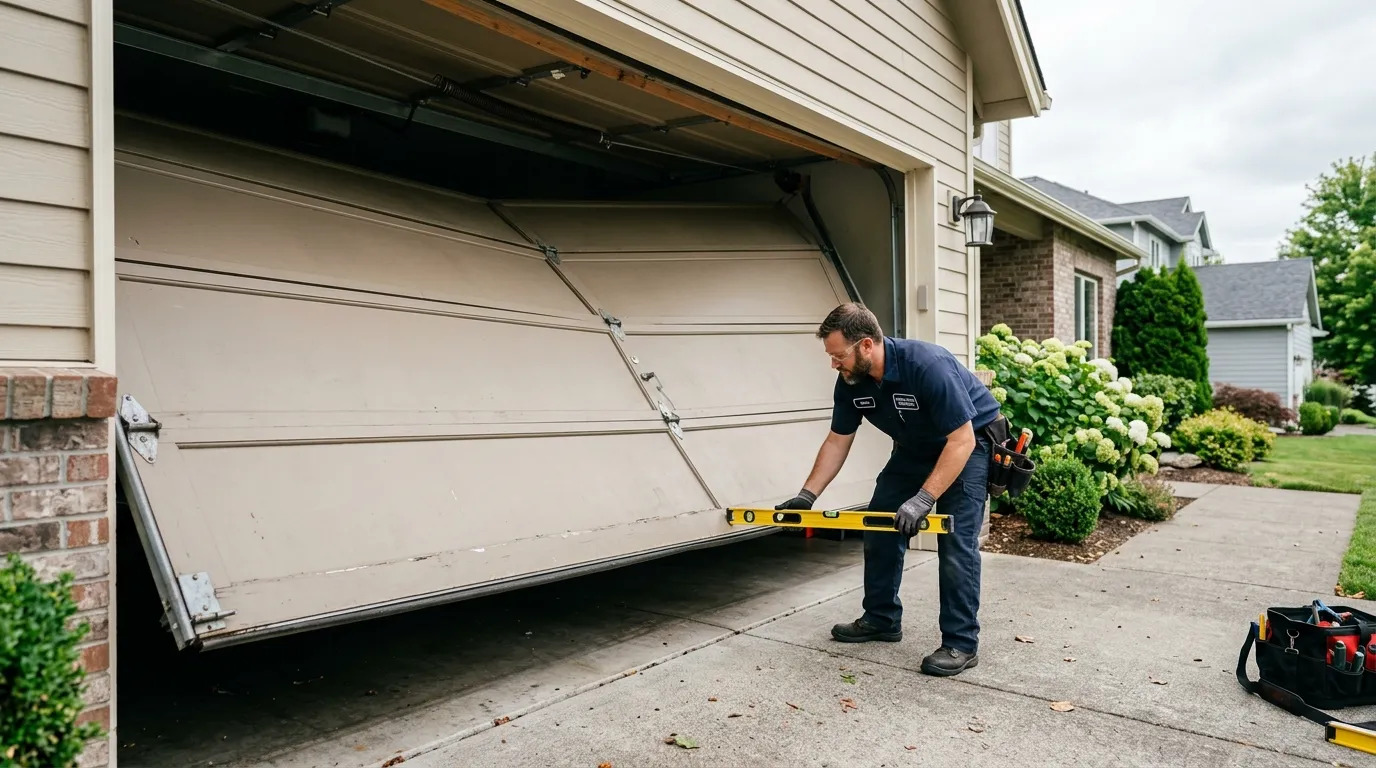
If the door won't budge and there's a visible gap or bend in the coiled spring above the door, that's a broken torsion spring. Don't force the opener - it can strip the gears trying to lift dead weight it was never meant to carry.

Reverses Partway or Opener Hums

A door that reverses partway up, or an opener that hums but the door doesn't move, often points to a cable that's frayed or jumped its drum. That's a common failure point on hardware original to a house this age.

Noisy but Still Moving

A door that's noisy but still moves under its own power is usually rollers or hinges worn from three-plus decades of cycles. That's a cheaper fix if you catch it before it takes the track with it.

Questions

Common questions

Is my garage door original to my Ellenton house?

If your house was built around 1988 and nobody's mentioned a garage door replacement, there's a real chance the spring, track, and rollers are original. That doesn't mean it's dangerous, but hardware that age is well past most manufacturers' rated cycle life, so a spring failure shouldn't come as a total surprise.

Do you have a branch in Ellenton?

No. We're based in Bradenton and cover Ellenton, about 4 miles out, from there. There's no separate local office or dispatch line for Ellenton - you call the same number and we send the same trucks.

Why did my spring break with no warning?

Torsion springs fail on cycle count, not on a schedule you can watch for. A spring installed with a house built decades ago has usually gone through more open-close cycles than its rated life, so the break can come on an ordinary Tuesday with no storm or cold snap to blame.

Can you match parts to a door this old?

Usually, yes. We carry spring sizes and cable gauges that match hardware from the late 1980s build era common in Ellenton. If a part turns out to be a size we didn't expect on the truck, that's the one case where we'd need a second trip.

Ready when you are

Need a garage door sorted in Bradenton?

Bradenton Garage Door Pros repairs and installs garage doors, springs and openers in Bradenton, FL and the surrounding area.

CallGet a quote