Garage Door Service for Ellenton Homes in Bradenton

Ellenton, Bradenton

Garage Door Service for Ellenton Homes

Ellenton homes mostly date to 1988, later than much of the Bradenton area, so the doors and springs we see here differ. We cover Ellenton from Bradenton, 4 miles out.

Serving Bradenton, FLBackground-checked techsHonest, upfront pricingFast local response

Booking

Booking a Visit

We run this job out of Bradenton, about 4 miles from Ellenton, so there's no separate branch here and no local dispatch number to remember - one call books the same truck and the same tech who covers the rest of the service area. When you call, tell us the door's approximate age; if your house was built around 1988, which is close to the median build year for Ellenton, that alone tells us a lot about what spring and track setup we're likely bringing parts for. We ask for the make on the opener if you know it, since Ellenton's housing stock skews newer than a lot of the surrounding towns and openers here are more often the mid-90s chain-drive units than the older screw-drive types. If you're not sure of any of that, don't worry about it - we sort it out on site. What we can't do is quote a same-day slot sight unseen; we book what the day allows and tell you honestly if it's tomorrow instead of today.

Booking a Visit
What Causes It Around Here

Local causes

What Causes It Around Here

Ellenton's housing is newer than a lot of what surrounds it - the area overall runs from 1964 clear through 2012 with a median around 1976, but Ellenton itself centers closer to 1988. That decade of construction usually means steel sectional doors on torsion spring systems rather than the older extension-spring, wood-panel setups you'll find in the 1960s and 70s pockets nearby. The failure pattern follows the age: torsion springs built in the late 80s are now well past a normal duty cycle, and we see them let go on both single and double doors, usually the double first because it carries more weight per cycle. The mild coastal climate here doesn't add the rust and warp problems you'd get further north, but humidity still eats at galvanized cable and unlubricated rollers over three decades. With household income in Ellenton running around $69,191, we also see a fair number of owners stretching a repair as long as the door still opens, which is fine until a cable frays down to a few strands.

On the truck

What Is on the Truck

Ellenton's late-1980s building standard shaped what we load for every service call in this neighborhood, from spring sizing down to roller material and opener type. Here's what's standard stock for doors built in that era, and where that stock has real limits.

Torsion Springs for Standard Sizes

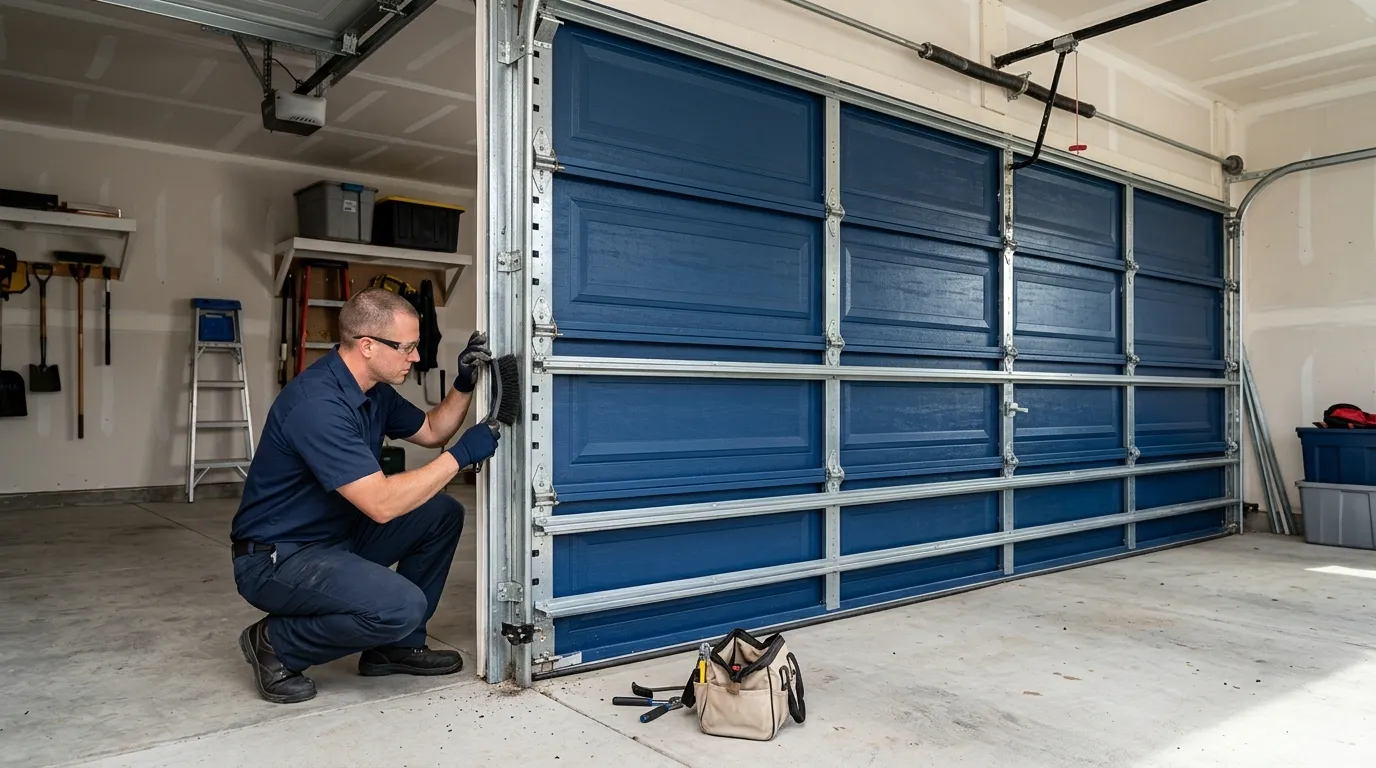
For a neighborhood built mostly in the late 1980s, the truck carries torsion springs sized for standard 16x7 double and 8x7 or 9x7 single steel doors - the sizes that were the builder standard in that era, before wider three-car garages became common.

Matching Drums, Shafts & Cable

We stock the mid-size torsion drums and shafts those doors use, along with galvanized lift cable in the gauge that setup calls for. That's the hardware built to match the spring sizes most common on Ellenton's doors.

Nylon Rollers as Standard

Nylon rollers go on the truck as standard now instead of steel, since they run quieter and don't need the periodic lubrication steel rollers demand. That's a fair trade for a coastal climate where salt air still gets inland this far.

Chain-Drive Opener Parts

Chain-drive opener parts are more common in the kit for this area than screw-drive, matching what a late-80s build is more likely to have had installed originally or replaced with since. We don't carry every legacy part for the oldest extension-spring doors from 1960s stock elsewhere in the service area, since that's a smaller share of what Ellenton itself has.

Our process

How We Fix It

Fixing a door from this building era means thinking about wear that hasn't happened yet, not just the part that already failed. Here's the order we work through on a typical Ellenton service call, from spring replacement to the honest opener conversation at the end.

  1. Replace torsion springs in pairs

    A broken torsion spring on a door from this era gets replaced in pairs, even if only one side let go, since springs installed around the same year wear at close to the same rate. Putting a new spring against a thirty-year-old one just means a second call within the year.

  2. Match spring size to door weight

    We match spring wire diameter and length to the door's actual weight rather than guessing from a chart, since builder-grade steel doors from the late 1980s vary more than people expect. Getting the sizing right the first time avoids a spring that's over or under the weight it needs to hold.

  3. Check track alignment too

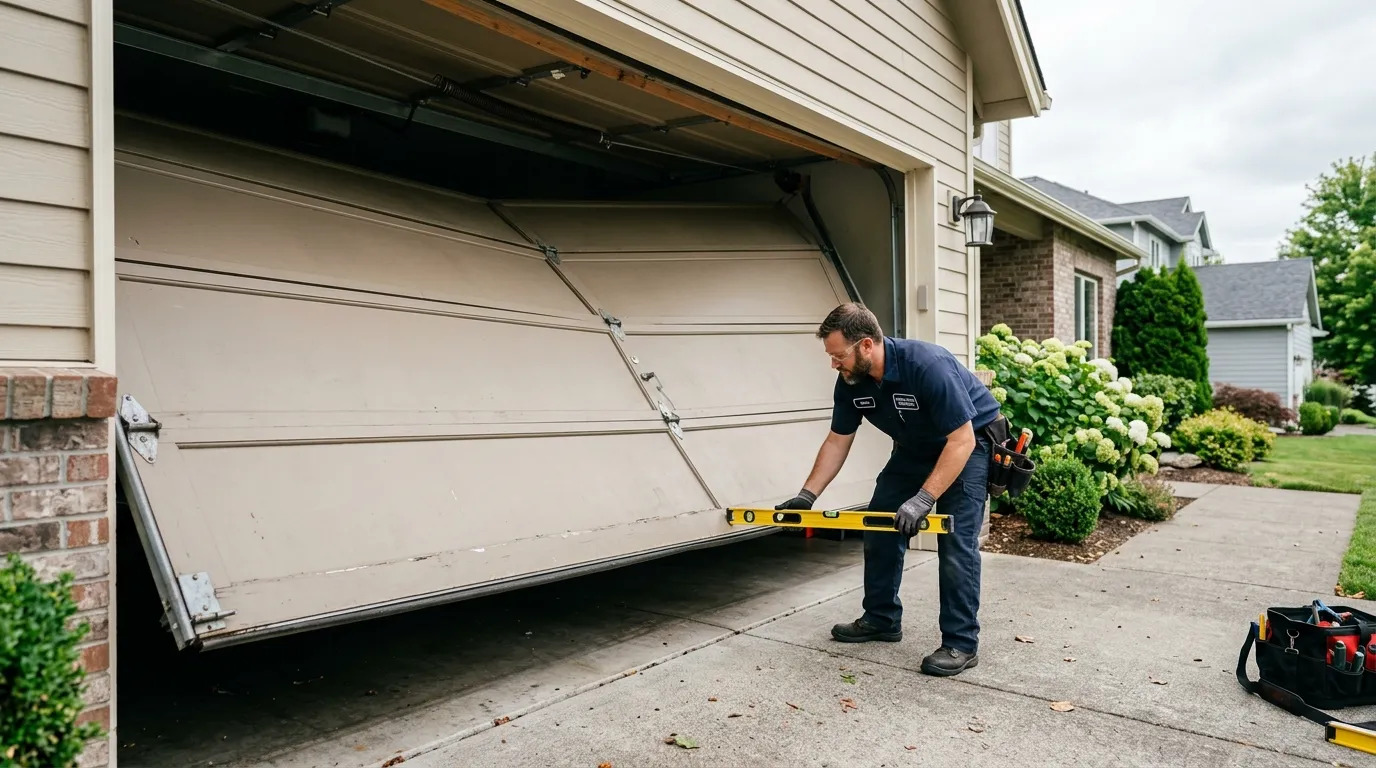
    Track alignment gets checked at the same visit, because a door that's been dragging on a bent track will chew through a new spring faster than it should. Catching that now protects the new spring instead of just replacing what already failed.

  4. Be honest about old openers

    If the opener is original to a 1988 build, we're generally recommending replacement over repair at this point, since parts for openers that old are hard to source and the labor to fix one rarely beats the cost of a new unit with a warranty. We tell owners that straight, even when it's not the answer they called for.

The DIY Question

DIY or pro

The DIY Question

Tightening a loose bracket or swapping a roller on a door this age is reasonable if you're comfortable on a ladder - the bolts and hardware haven't changed much since 1988, and it's not risky work. Torsion spring replacement is different. A wound spring on a 16x7 double door carries enough stored force to break bones, and the winding bars and cones for that job aren't something worth improvising with a socket wrench. We also don't recommend owners try to diagnose an opener that's original to a late-80s install - logic boards from that period fail in ways that mimic a bad spring or a stuck sensor, and guessing wrong means paying for parts you didn't need. If a door is dragging, making a grinding sound on the track, or the opener chatters without lifting, that's worth a call before you spend a Saturday on it.

Warning signs

What You Are Seeing

The way a door moves tells you more about what's wrong than any noise it makes, and on doors from this building era the same failure shows up a few different ways. Here's what each sign usually points to before a tech ever gets there.

Slow Start or Fast Drop

If your door is one of the steel sectional models common to Ellenton's 1988-era construction, the earliest sign of trouble is usually a door that starts slow, then jerks partway up - that's a spring losing tension unevenly, not an opener problem, even though it looks like one. A door that drops fast on the way down instead of easing shut points the same direction.

Dents More Common Than Rust

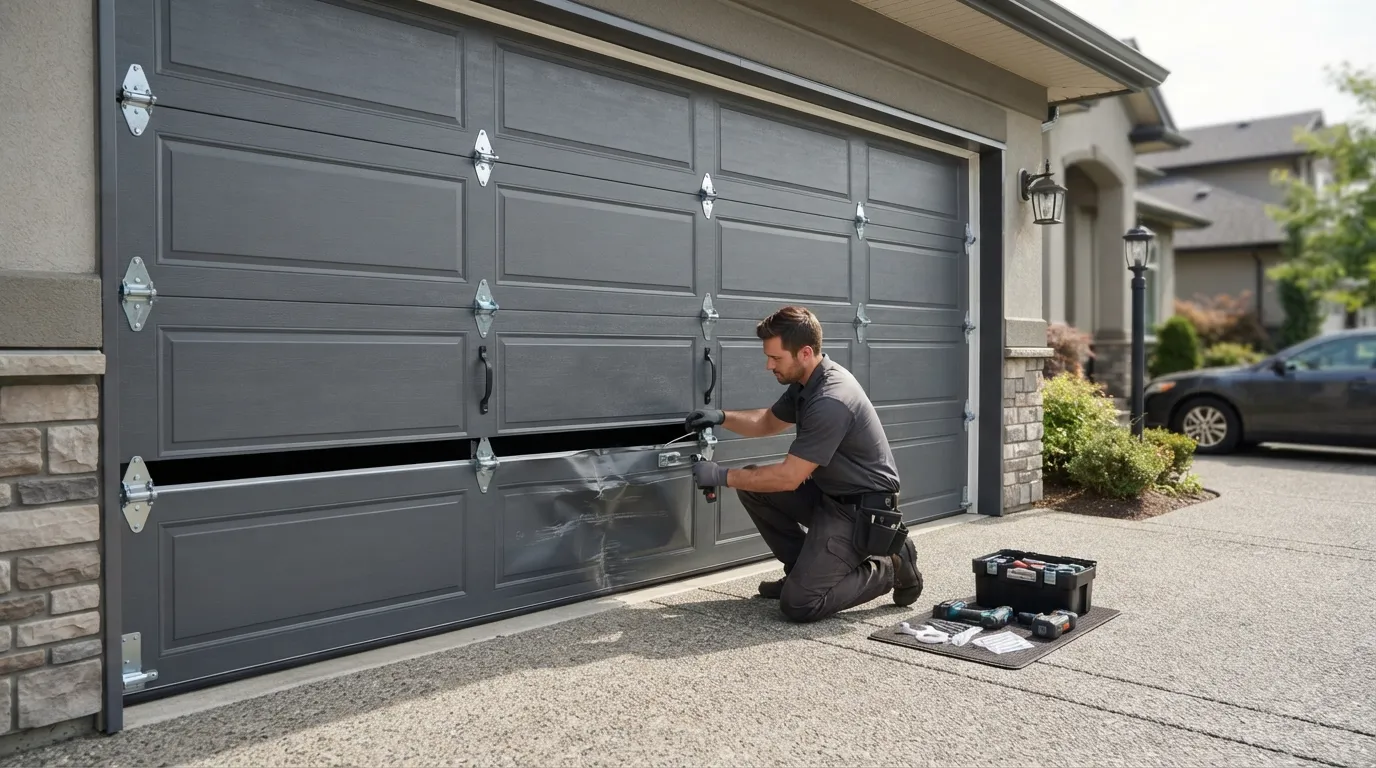
Rust streaks near the bottom corners are less common here than in older, more exposed stock nearby, since Ellenton's homes are newer and the mild coastal climate is gentler than people assume. Panel dents from lawn equipment or a car bumper are common regardless of the house's age.

Loud Bang and Won't Open

If you're hearing a loud bang followed by the door refusing to open at all, that's almost always the torsion spring, and it's not a wait-and-see situation. The door is heavier than the opener alone was ever meant to lift.

Questions

Common questions

How far out is Ellenton from your Bradenton crew?

About 4 miles. There's no separate branch in Ellenton - the same truck and technician that cover the rest of the service area handle calls here, so booking works the same way as anywhere else we serve.

Are Ellenton's garage doors different from other nearby towns?

Often, yes. Ellenton's housing centers around a 1988 median build year, later than much of the surrounding area, which runs from the 1960s through the 2010s. That later build date usually means steel torsion-spring doors rather than the older extension-spring setups found in older 1960s and 70s pockets nearby.

Is my opener too old to repair if my house dates to the late 1980s?

Often it's not worth it. Openers original to a late-1980s build are near or past their practical lifespan, and parts for that generation are hard to source. In most cases replacement costs less in the long run than chasing repairs on a logic board that old.

Do you stock parts for older extension-spring doors too?

We carry parts sized mainly for the torsion-spring, standard-size steel doors common to Ellenton's building era. Older extension-spring hardware from 1960s-era stock elsewhere in the service area is a smaller share of what we keep loaded, so call ahead if your door is noticeably older than a typical Ellenton house.

Ready when you are

Need a garage door sorted in Bradenton?

Bradenton Garage Door Pros repairs and installs garage doors, springs and openers in Bradenton, FL and the surrounding area.

CallGet a quote