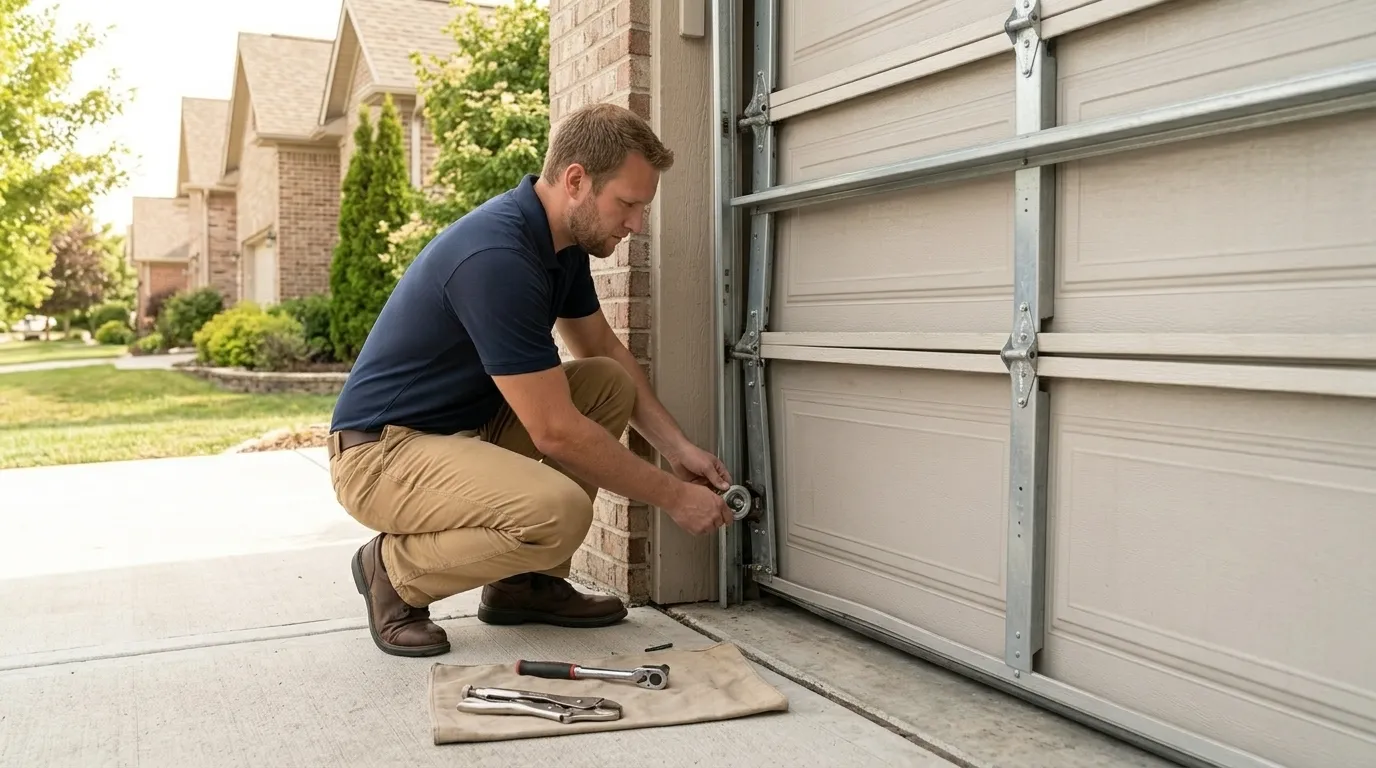
New Garage Door Installation for Ellenton Homes in Bradenton

Ellenton, Bradenton

New Garage Door Installation for Ellenton Homes

Ellenton's houses mostly went up in the late 1980s, not the 1960s stock common closer to Bradenton. We install doors sized and sprung for that era, from 4 miles away.

Serving Bradenton, FLBackground-checked techsHonest, upfront pricingFast local response

Booking

Booking a Visit

We run out of Bradenton, about 4 miles from Ellenton, so there's no local branch to call - just a truck that comes over when you're ready. Because Ellenton's houses are newer than most of the surrounding service area (median build year 1988, versus a much older mix closer to town), the openings are usually standard sizes with room already framed for a proper header. That makes scheduling simpler: we can often quote a new install over the phone once we know the door width and whether you're keeping the existing opener bracket. We'll ask for the model number on the old door if you have it, since a lot of 1988-era builders used a handful of standard panel styles that we can match or intentionally replace. If you want a walk-through before you commit, we can do that too - just know the visit itself takes time out of the day, so we try to get the sizing right on the first call.
Booking a Visit
What Causes It Around Here

Local causes

What Causes It Around Here

With about 1,927 households in Ellenton and a median build year of 1988, this isn't a neighborhood full of original 1960s hardware - it's a neighborhood full of doors and openers that are now entering their second or third replacement cycle. A door installed when a house went up in the late 80s is 35+ years old if it's still the original; even a mid-90s replacement is pushing 30. What we see most isn't rot or storm damage - it's springs and rollers that have simply outlived their rated cycles, and steel panels with the foam core starting to sag at the bottom section. The mild temperate climate here doesn't wreck doors the way freeze-thaw regions do, so the failure mode is usually mechanical fatigue rather than weather damage. Track alignment issues show up too, often from a door that's been forced past a binding spot for months before anyone calls.

On the truck

What Is on the Truck

A new install runs smoother when the truck already has the right size and style loaded, and for Ellenton's late-1980s openings, that's usually a known quantity. Here's the standard stock, and the one category that needs a special order.

Standard Doors & Sized Springs

For a new install we bring standard-width steel and composite doors in the sizes that match typical late-80s Ellenton openings, along with torsion spring sets sized to the door weight rather than a one-size-fits-all spring. Matching the spring to the actual door avoids the tension problems a generic spring can cause.

Belt-Drive, Chain-Drive & Wall-Mount Openers

We carry both belt-drive and chain-drive openers, plus the newer wall-mount control panels that don't need a bulky rail if your ceiling height is tight. That range covers most garages we install in, regardless of ceiling clearance.

Custom Wood-Look Doors Take Longer

We don't stock every custom wood-look door on the market - those are special order and add lead time, so if you want something outside our standard line, expect a wait. What we do keep on hand covers the bulk of the jobs we run in Ellenton: a straightforward two-car steel door, standard hardware, and an opener that matches whatever wiring is already in the garage.

Our process

How We Fix It

A new install is a sequence, not a single task, and skipping a step early on shows up as a problem later. Here's how a typical Ellenton install runs, from pulling the old door off the header to the final balance check before we leave.

  1. Remove old door and set new track

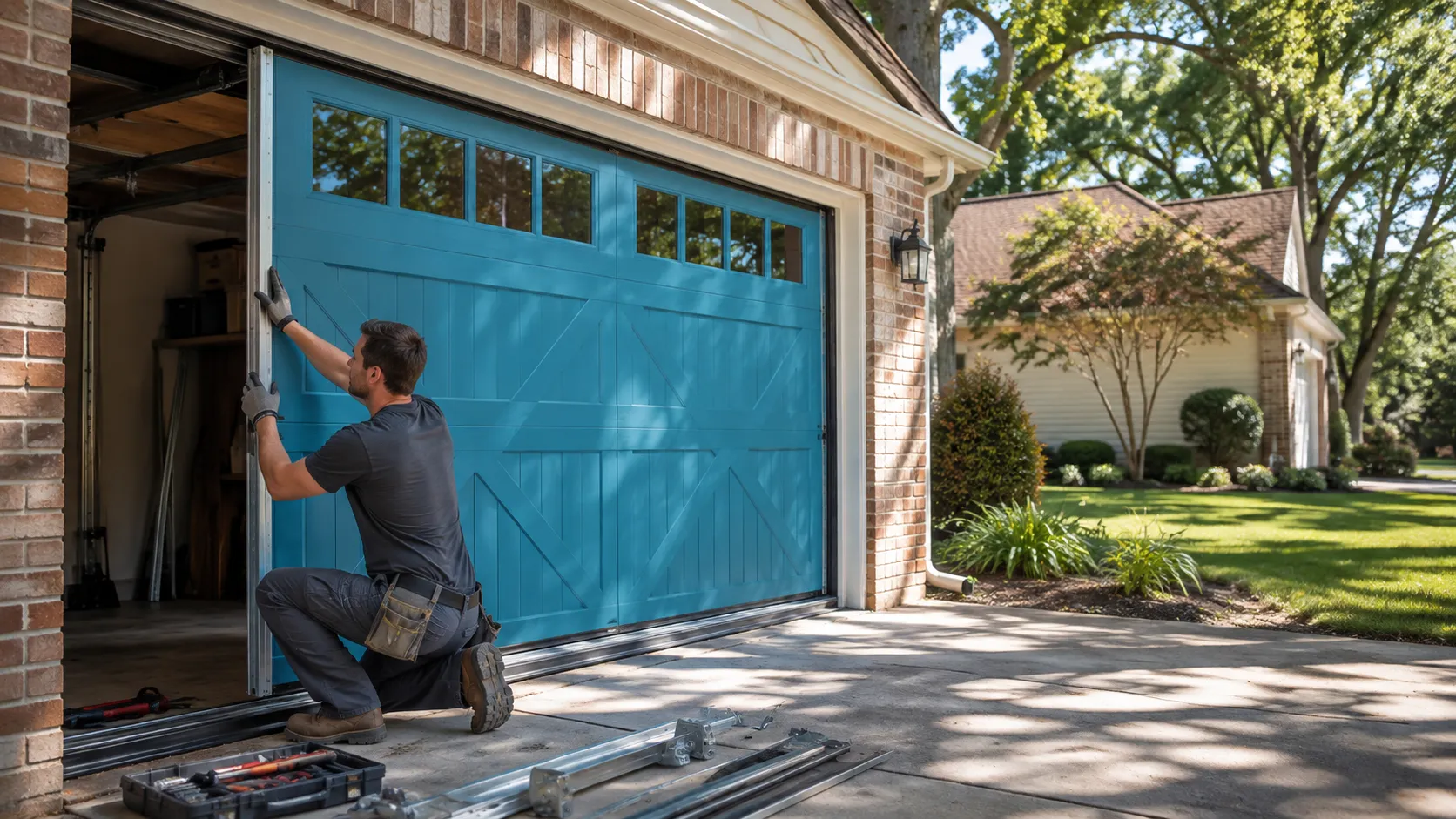
    A new install starts with pulling the old door and track off the header, checking that the framing is square (it usually is, given the build era), and setting new track plumb on both sides.

  2. Size the spring to door weight

    We size the torsion spring to the actual door weight - insulated steel doors and older solid steel doors don't take the same spring. Using the wrong one is how you get a door that slams down or won't stay open.

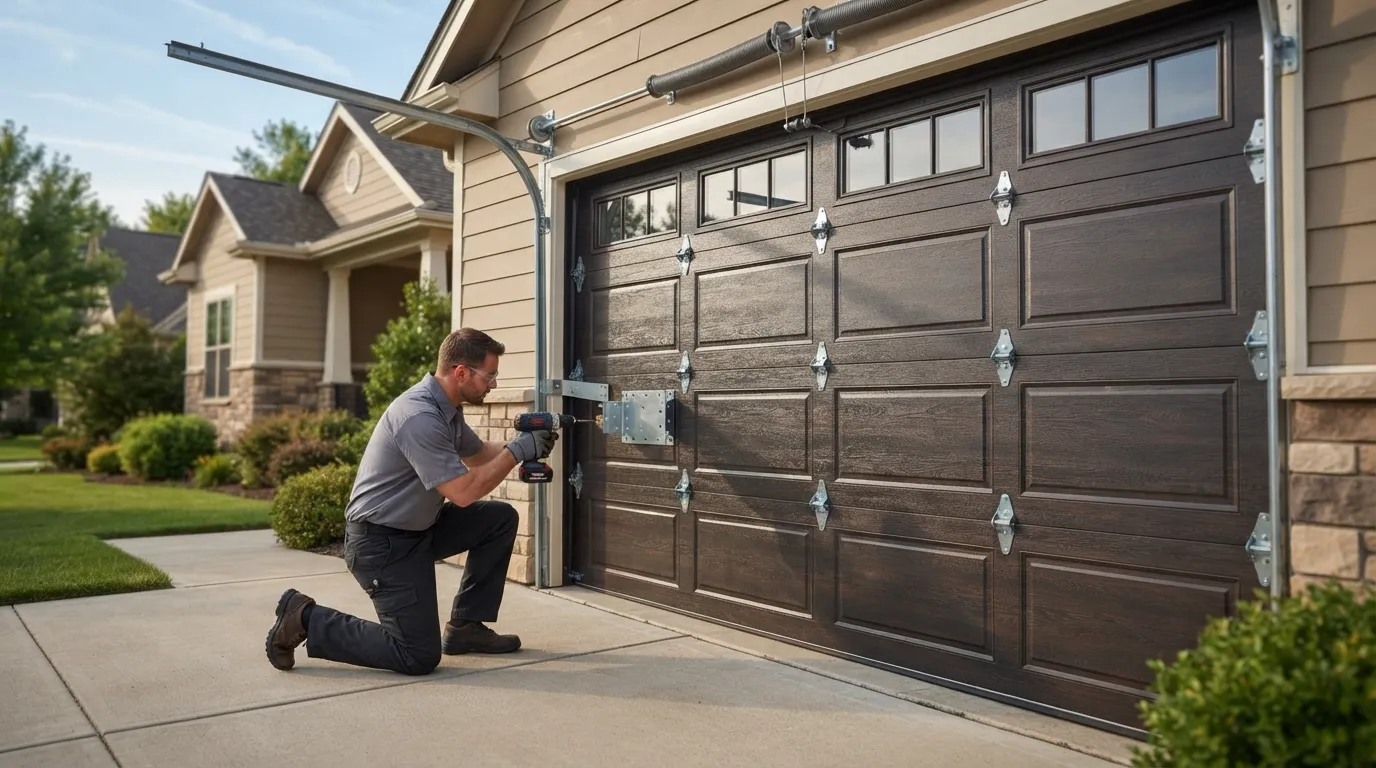
  3. Install cables, drums, and opener

    Cables and drums go on next, then the opener, with travel limits and force settings adjusted so the door doesn't crush against the floor or strain the header. Getting those settings right protects both the door and the header from repeated strain.

  4. Balance-test with the opener disconnected

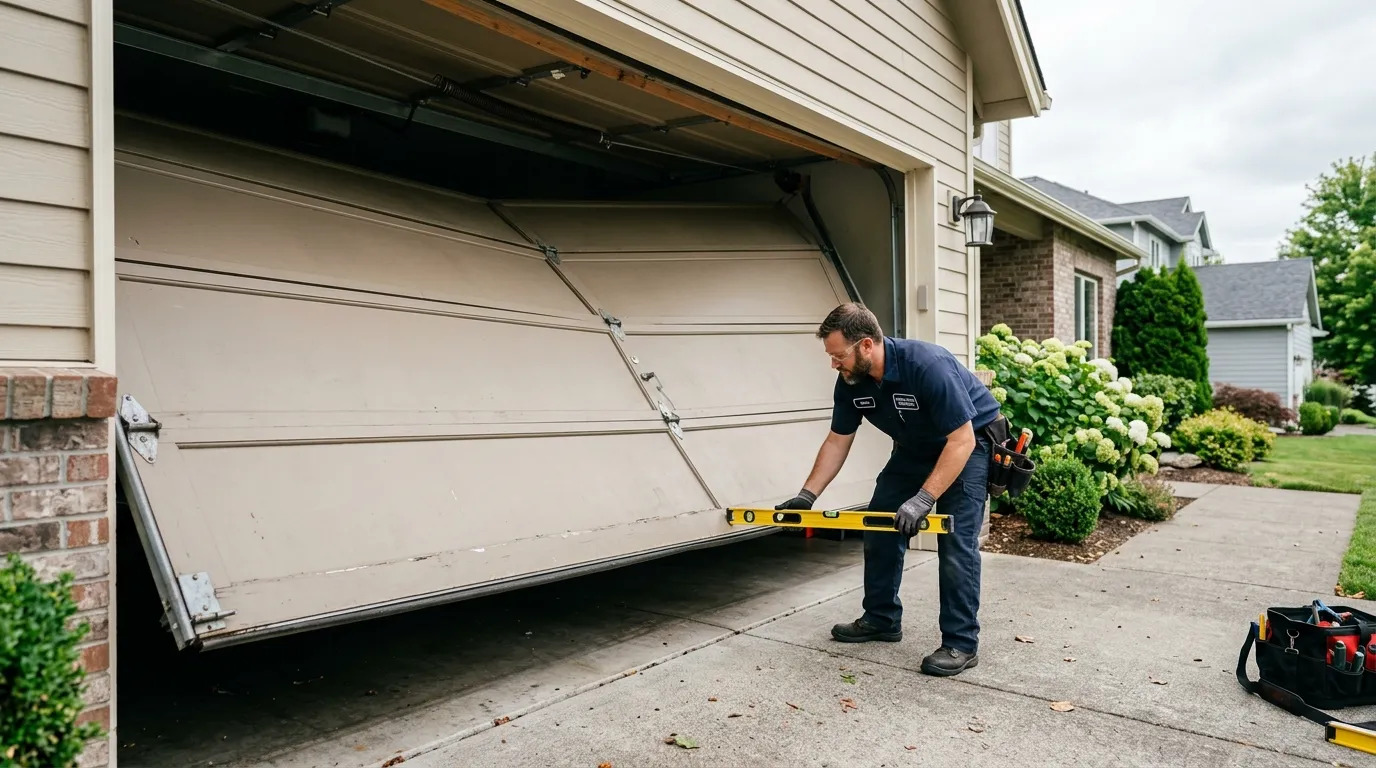
    Last step is balance-testing the door by hand with the opener disconnected - if it doesn't hold roughly level six inches off the floor, the spring tension isn't right yet. We adjust before we call the job done, not after.

The DIY Question

DIY or pro

The DIY Question

Swapping panels or an opener yourself is doable if you've got the tools and patience. Setting spring tension is not a place to save money - a torsion spring under load has put people in the hospital, and it's the one part of this job we don't recommend doing without the right winding bars and a second set of hands. If your door is original to a late-80s build and you're just replacing a broken panel, matching the exact profile can be hard since manufacturers change panel dimensions over the years; sometimes it's cheaper to replace the whole door than hunt down one matching section. That's a real limitation - we can't always match an old panel, and we'll tell you straight if a full replacement makes more financial sense than a patch.

Warning signs

What You Are Seeing

Not every sign your door gives you means the door itself is failing - sometimes it's the spring, sometimes it's just old paint. Here's how to tell the difference before a small issue turns into a full section replacement.

Groaning, Sagging, or Straining

If your garage door is groaning louder than it used to, sagging visibly at the bottom edge, or the opener is straining and reversing before it fully closes, those are signs the spring tension or the door weight balance has drifted. That's common in a door that's been running since a house's original 1988-era build.

Won't Stay Up When Disconnected

A door that won't stay up on its own once disconnected from the opener has a spring problem, not an opener problem. That distinction matters because it changes which part actually needs replacing, and testing it takes less than a minute with the opener unplugged.

Cosmetic Dents and Fading

Cosmetic dents or fading on steel doors from this era are common too, since paint and coatings from that period don't hold up the way current finishes do. None of these mean you need service today, but they're worth getting looked at before a full section fails.

Questions

Common questions

Do you have a branch in Ellenton?

No. We're based in Bradenton, about 4 miles away, and drive out for every job. There's no separate Ellenton office or dispatch point - just the same truck and crew coming to you.

Will a new door fit my original 1988 opening without resizing the frame?

Usually yes. Most Ellenton homes from that era have standard framed openings, so a new door typically fits without carpentry work. We confirm exact width and height before quoting to avoid surprises.

Is my climate hard on garage doors here?

Not especially. This area sits in a mild temperate band, so we don't see the freeze-related hardware failures some regions do. Most of what we replace here has simply worn out mechanically after decades of cycles.

Can you match the panel style on my original door?

Sometimes. Panel profiles change between manufacturers and years, so an exact match on an older door isn't guaranteed. If we can't match it, we'll tell you and let you decide between a partial fix and full replacement.

Ready when you are

Need a garage door sorted in Bradenton?

Bradenton Garage Door Pros repairs and installs garage doors, springs and openers in Bradenton, FL and the surrounding area.

CallGet a quote